Chapter 3. The Birth of the Halifax Local League
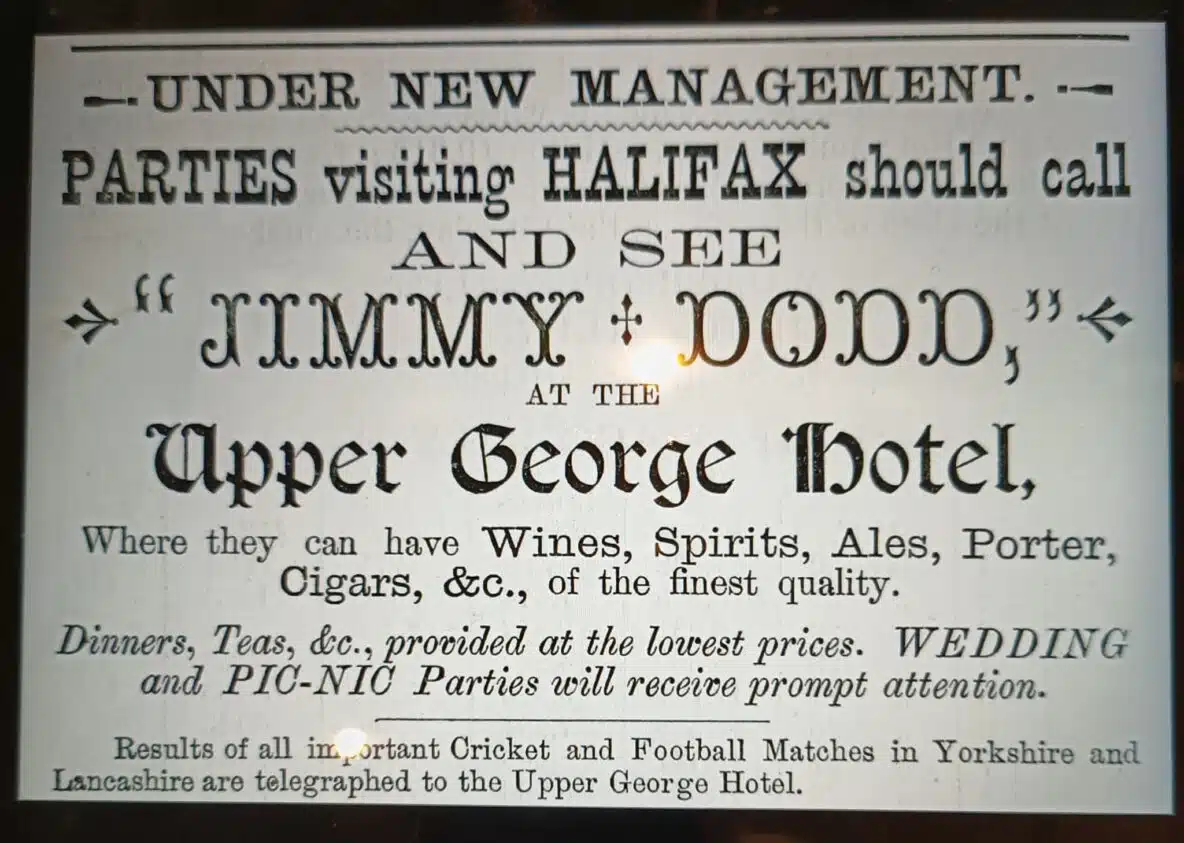
The new Northern Union continued to expand. Its authorities were keen to set up local leagues, encouraging their senior clubs to take a lead. The Halifax club favoured the idea of taking control of one, offering a trophy and medals for a new local competition, and agreeing to pay a portion of the rent on their fields; in return they wanted the first call on all their clubs’ players. In early 1899 they called a meeting at The Upper George Hotel, where they themselves had been formed and where the landlord was their legendary ex-player Jimmy Dodd, inviting all junior clubs in the district who were still playing Rugby Union. Representatives of twenty turned up: Elland, Elland Free Wanderers, Holywell Brook, Stainland, Halifax St Mary’s, Bank Top Free Wanderers, Halifax Gymnasium, Ovenden, Bradshaw, Siddal Victoria, Halifax Parish Church, Hipperholme, Hove Edge, Halifax Crescent, Halifax Free Wanderers, Thrum Hall, Spring Edge, Coley St Matthews, West Vale and Boothtown. Follow-up meetings brought Luddenden Foot and Bank Top Free Wanderers.
Some were dubious of the Halifax club’s involvement, not wanting them to steal their players, and no agreement was reached at this stage, but by the start of season 1899-1900 a new Halifax & District Junior League was indeed formed. The use of the term “Junior” was nothing to do with age-groups – it was meant in the way of “Amateur”, as a differentiation from the “Senior” clubs who played in the Yorkshire Senior Competition. The word “Amateur” was never used at this time – not in Halifax anyway, where it was appended much later. Originally there was no concept of a separate amateur and professional game – every team was the same. It was the creation of local leagues that led to a divergence, but along the lines of Junior and Senior rather than amateur and professional. There was never any thought that local league players would be paid though.
A league table printed in the local press in November comprised twelve teams, in the order of Thrum Hall, Ovenden, Bank Top Free Wanderers, Glen View (Hebden Bridge), Hipperholme, Coley St Matthew’s, West Vale Rovers (who played at Victoria Road, Elland), Ripponden, Halifax Parish Church (who played at Bank Top), Bradshaw and Brearley, plus King Cross who had withdrawn after just a few matches. Thrum Hall held on to top spot to become the first winners.
Other teams chose not to join. Some stayed in Rugby Union to compete in a new league titled the Fletcher’s Halifax & District Football League, including Queens Road Juniors, Boothtown United (with a ground at Grantham Road), Tuel Lane White Star and Bowling Dyke. But within twelve months it had folded, taking most teams with it. Those that remained switched to Northern Union in 1900. Halifax Crescent, Elland Victoria, Todmorden Church, Todmorden “A”, Siddal Victoria and Cross Stone (Todmorden) were all in the local league in its second year, though Bank Top Free Wanderers, Coley St Matthew’s, Halifax Parish Church and Bradshaw dropped out. There was also a Huddersfield & District League by this time, which featured Brighouse “A”, Stainland, Brighouse Juniors, Elland Free Wanderers and Rastrick from the Halifax area.
Ovenden were like many of the others just a junior team destined not to survive long. They were based at the Ovenden Cross Inn and played on the field beside it. They strengthened for a while with the acquisition of players from disbanded teams at Page Hill and Denfield and were able to perform well in the new league, restyling themselves as Ovenden United and continuing to season 1900-1.
Siddal Victoria, based at Exley, followed in the footsteps of an earlier team in that village from the 1870s and ‘80s known as Siddal Hornets. Victoria were formed in the wake of Salterhebble Athletic folding in 1893 and operated from 1894 to 1901. They had started in the days of Rugby Union, but after moving over had spells in both the Huddersfield and Halifax Northern Union local leagues. They had no connection with the Siddal team of today, indeed changing their name to Salterhebble after 1901. Under that name they were to reach the local cup final in 1905, but had to move from their ground at Exley to Bank Top in 1906.
Halifax Crescent, formed under the name Halifax White Star in 1889 and managed at one time by the landlord of the Ring O’Bells Inn, were a similar junior organisation who continued for a few years, playing variously at Highroad Well (Sandhall Lane), Pellon, Bank Top and on Savile Park Moor with some success and plenty of ambition. In 1891 they had entered the Halifax Charity Cup, reached the semi-final stage a year later, and in 1894 and 1895 were runners-up in the Wyke Challenge Cup Final, the second after extra-time. A star player was half-back Arnold Nettleton, who was to play in the 1904 Challenge Cup Final after signing for Halifax in 1897.
Elland Free Wanderers, the former Rugby Union Club, had switched to Northern Union to join the Huddersfield & District League. In their early years they were in the Victoria Road area, with fields at Jepson House and Cross Lane, but later at Eastgate. They became a top side at the turn of the century when new players joined from nearby clubs that had closed down, taking the Halifax Charity Cup, the Huddersfield & District Cup and the Huddersfield championship at that time.
Bank Top Free Wanderers had been around for some time at various locations around Southowram including Howgate Hill and Oake Field in Long Lane, with headquarters in later years at the Blue Bell Inn. In 1899 they had beaten Siddal Victoria and Luddenden Foot to reach the semi-final of the Charity Cup, its first under Northern Union jurisdiction, but lost out to Halifax “A” on neutral ground at Ovenden on Christmas Day morning.
Thrum Hall progressed further after becoming the first Halifax & District League winners in 1899-1900. That season a Yorkshire Junior Cup (for open-age players; in more modern times the BARLA Yorkshire Cup) had started. It was the pinnacle of the game in the county, the highest honour a junior club could win and in season 1900-1 Thrum Hall reached the Final, though they lost to Kirkstall 9-3 at Meanwood Road, Leeds. In 1901-2 they went one better, winning the trophy against Kinsley on Wakefield Trinity’s ground at Belle Vue. They had a scare after winning 5-0 on March 29th, when Kinsley objected that Thrum Hall had not submitted a team list to them before the game, and it was ordered the game be replayed. Thrum Hall won again though, on April 19th, by 8-3. Winger Herman Hartley, who was to sign for Halifax in 1902 and played in the 1904 Challenge Cup Final victory over Warrington, scored a try and converted a Huckler try in the Belle Vue replay. No other Halifax team ever won the Yorkshire Junior Cup in the pre World War One years, the nearest being Brighouse St James, runners-up in 1903, similarly Halifax “A” in 1905 and a reformed Brighouse Rangers in 1914.
The top clubs in this period remained those who operated in the regional leagues rather than the local league, most of them the former senior Rugby Union Clubs that joined Halifax in the Northern Union. By the early 1900s this meant the Yorkshire Combination, where the reserve sides of professional clubs competed, though Sowerby Bridge were promoted even beyond that in 1901 to the Yorkshire Senior Competition. Thrum Hall and the new Salterhebble also briefly joined the Yorkshire Combination in 1902-3.