Clubs > Sowerby Bridge Robins > The Robins
The Robins
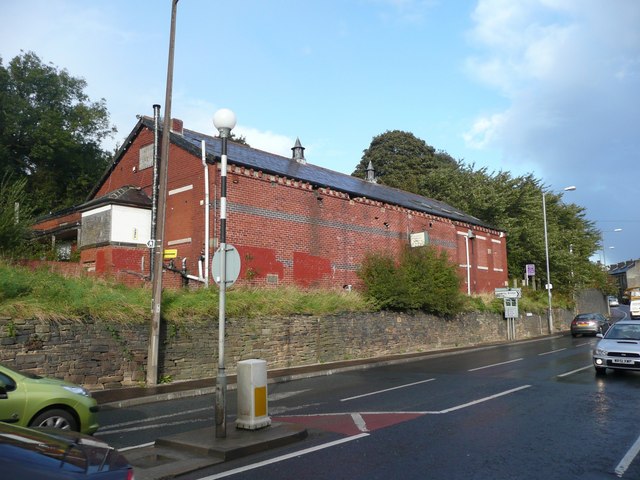
Off the pitch, the cost of their council pitch on Saville Park was becoming expensive and the club received an offered the chance of a new ground and headquarters. The offer came from Robin Jones who had the Friendly Snooker Club on Burnley and had space behind the Snooker Club for a Rugby League pitch. The club decided to leave their long-term home and move in time for the 1993-94 season.
The club not only moved but also changed the name to Sowerby Bridge Robins (although the Snooker club was, in reality, in Warley as the boundary to Sowerby Bridge runs up Burnley Road!). Gary Widdop took over as player/coach and Alan Rivers and Paul Kemp continued as the “A” team coaching team. There was also the return of several players from Greetland All Rounders. Jimmy Bailey, Paul Taylor, Damian Whitely and the Hardcastle brothers. These players together with Nigel Sutcliffe and Mark Dinsmore would form the core of the first team. With some young players in the “A” team, the future for the newly christened Robins look bright.
The club were also recognised that season by the Halifax & District League who awarded them the “Most Sporting Team” Trophy and A White took the “Most Sporting Player” award.
The club attracted a number of experienced coaches over the years including Tony Sheard and Garry Coulter.
In Division 2 for the 1994-95 season, the Robins had some great victories. One notable win was away at Silsden Park “A” by 99-0 with Niel Sutcliffe scoring 5 tries. The “A” was also doing well in Alliance Division 3 with some large scores. They beat Silsden “A” by 56-10 and had an even more emphatic win over Hoyland Vikings “A” by 92-6.
Their good form continued in the 1995-96 season when the club also entered the BARLA Yorkshire Cup. They were drawn away at Hull Supporters over in Hull: not an easy place to go! They were defeated but gained a lot of respect as the final score read 22-18.
The Robins were a good enough team to make several appearances in cup finals at Thrum Hall.
They won the Halifax Handicap Cup at Thrum Hall on four occasions during the 1990’s: a run of four finals in six years: 1994. 1996. 1997 and 1999. Central to winning the Cup in 1994 was Man of the Match and former Calder Valley captain/coach, Shaun Charnley.
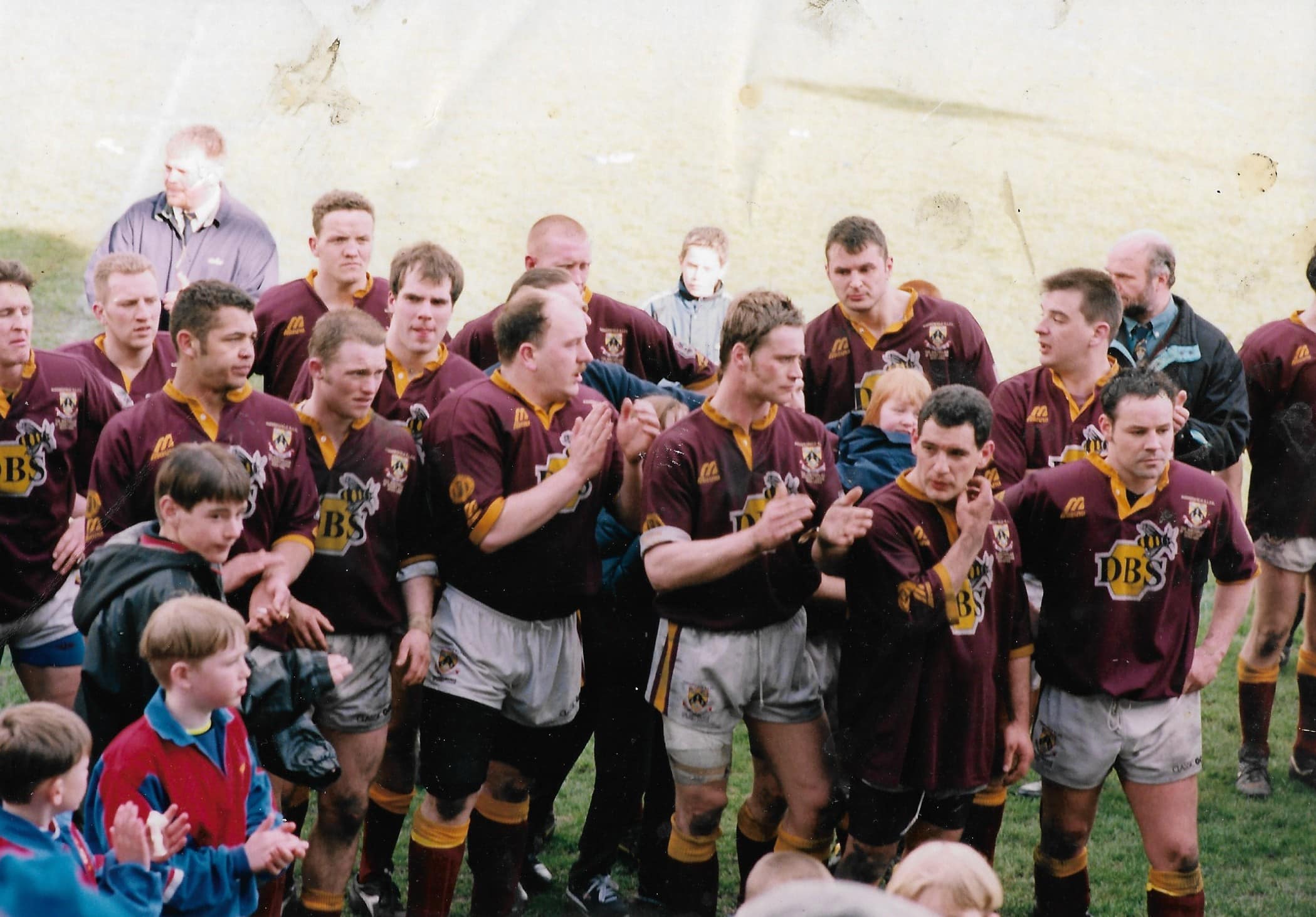
They also reached the final of the Halifax Cup in 1998 against a high-flying Siddal side. Calder Valley were their semi-final opponents and former Calder Valley captain/coach, Shaun Charnley, had another great game against his former club but sadly broke his arm which sadly ruled him out of the final. The final was at Thrum Hall. The Robins had Gary Coulter (player/coach), Dave Oates, Jimmy Bailey and kicker Dave Bicknell all in the side together with stalwarts Mark Dinsmore and Paul Talyor. Disappointingly for the Robins, Siddal ran out on top by 30-16.
Also, in the 1990’s, the Robins also achieved a club double of both first and “A” teams finishing a season as Champions of their division. A great achievement.
Jimmy Bailey who had earlier coach the team when they were Cook Street Rams recalled his time at the Robins,
“we were all proper mates. We enjoyed ourselves.”
Following a successful Division 1 season in 1997-98, the Robins finally reached the goal of playing in the Premier Division of the Pennine League in the 1998-99 season. The division was a strong one and results were difficult to come by. Indeed, in January 1999, they were well beaten by West Bowling in a 58-4 mauling.
It appeared that the Sowerby Bridge Robins were in a good place and the team was doing well.
However, in 2000, it is reported that there was a disagreement between some of the players and the owner of the Snooker Club which resulted in the Sowerby Bridge Robins leaving and subsequently folding. There was an ill-fated attempt to merge with Calder Valley. Several players did indeed move to Calder Valley including Mark Dinsmore, Jason McDonald, Rick Smith, Dave Bicknell and Paul Taylor. But others dispersed to clubs across Halifax or simply stopped playing.
The snooker club itself was later demolished and housing built on the site.