Clubs > Todmorden > Early Teams
Early Teams
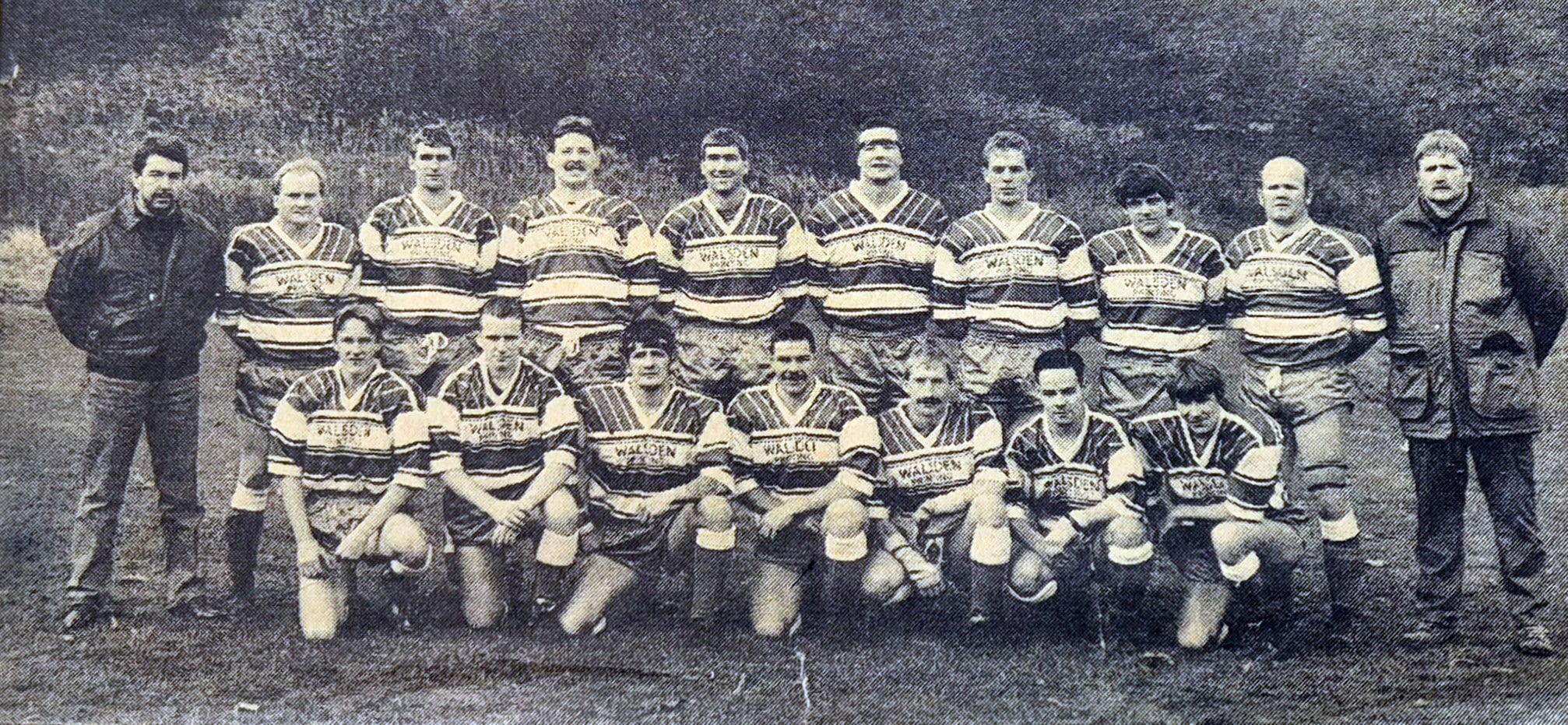
There was a rugby team in Todmorden formed in 1878 as flood of local teams followed the foundation of Halifax in 1873.
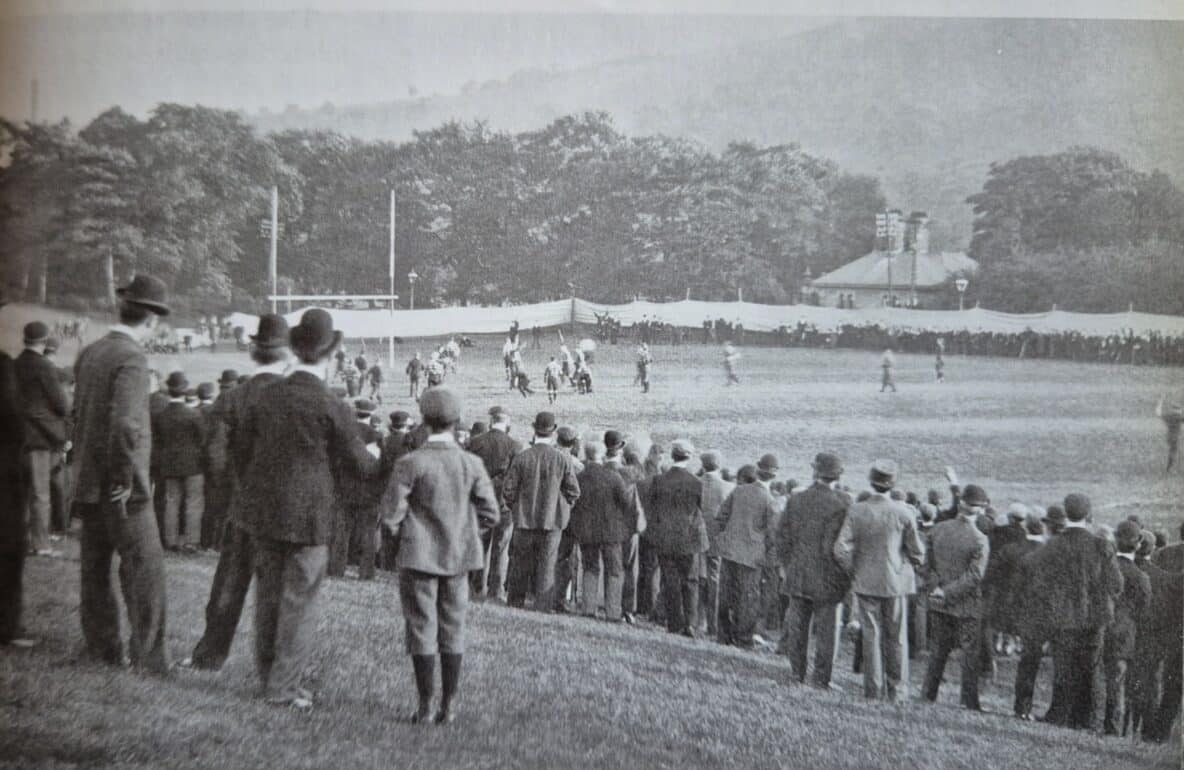
There was a plethora of teams in the Todmorden area in the 1880’s. These teams included Todmorden Rangers, Todmorden Juniors and Todmorden Rovers, but it was Rangers who were the first and most dominant. Based at Longfield and later Sandholme and playing against Lancashire-based teams as well as those from Halifax, they called themselves simply Todmorden in 1881 and moved to a new ground near Todmorden cricket field on Burnley Road known as The Holme. It was on the opposite side of the road to the cricket ground – Mons Mill was later built there, that too later replaced by housing. The club did not last very long, but was soon replaced by a new Todmorden F.C., also playing at The Holme. Among other Todmorden-based teams in the 1880s were Eastwood Rovers and Woodhouse, who played at Hill House in Castle Lane.
As the 1880’s went by, the Yorkshire Cup began life and Todmorden were one of the sides competing.
In 1897 Todmorden joined the Northern Rugby Football Union Lancashire Section No3 competition as they thought this would meet stiffer opposition. They planned on having friendly games against Yorkshire clubs such as alongside Halifax “A” and Brighouse Rangers “A”.
Todmorden’s opening Northern Union game was against Leigh Shamrocks and this was duly won by 3 points to nil in front of a sizeable crowd. Todmorden participated in knock out competitions. They entered the Rochdale and District Charity Cup and having beaten Walsden St. Peter’s 17-3 in the first round, they were defeated in the next round by Rochdale Hornets “A” team.
Todmorden also entered the Northern Union Yorkshire Cup and although there were some successes, a 38-0 victory over Featherstone Rovers for example, there was no silverware.
After one season in the Lancashire League, Todmorden applied for membership of the Yorkshire Northern Rugby Union and were placed in the Number 2 competition West. Too months later the Northern Union officially adopted “professionalism”. This caused Todmorden to reorganise their team bringing in several players from Hebden Bridge and a useful centre , JW Mitchell who transferred from Halifax. Todmorden won the Western Division and agreed to a play off against Eastern Division winners, Hull. A large gate was attracted at Hull KR’s ground and although Todmorden suffered a 36 point defeat their share of the gate money, £37 17s 9d was some compensation.
By the end of the 1889-99 season Todmorden were struggling to make ends meet. They reported a deficit of £50 and the committee appealed for public donations.
In November of that year, Todmorden played a home game against Hebden Bridge who had now joined the Northern Union. A special train ran from Hebden Bridge to Todmorden, the ordinary trains were full! The Todmorden Band turned out, the Mayor, Alderman Ormerod JP was there and a crowd of over 6000 attended. The Major kicked off both halves of the game. In the end, Todmorden won the game by 9-2 scoring three tries.
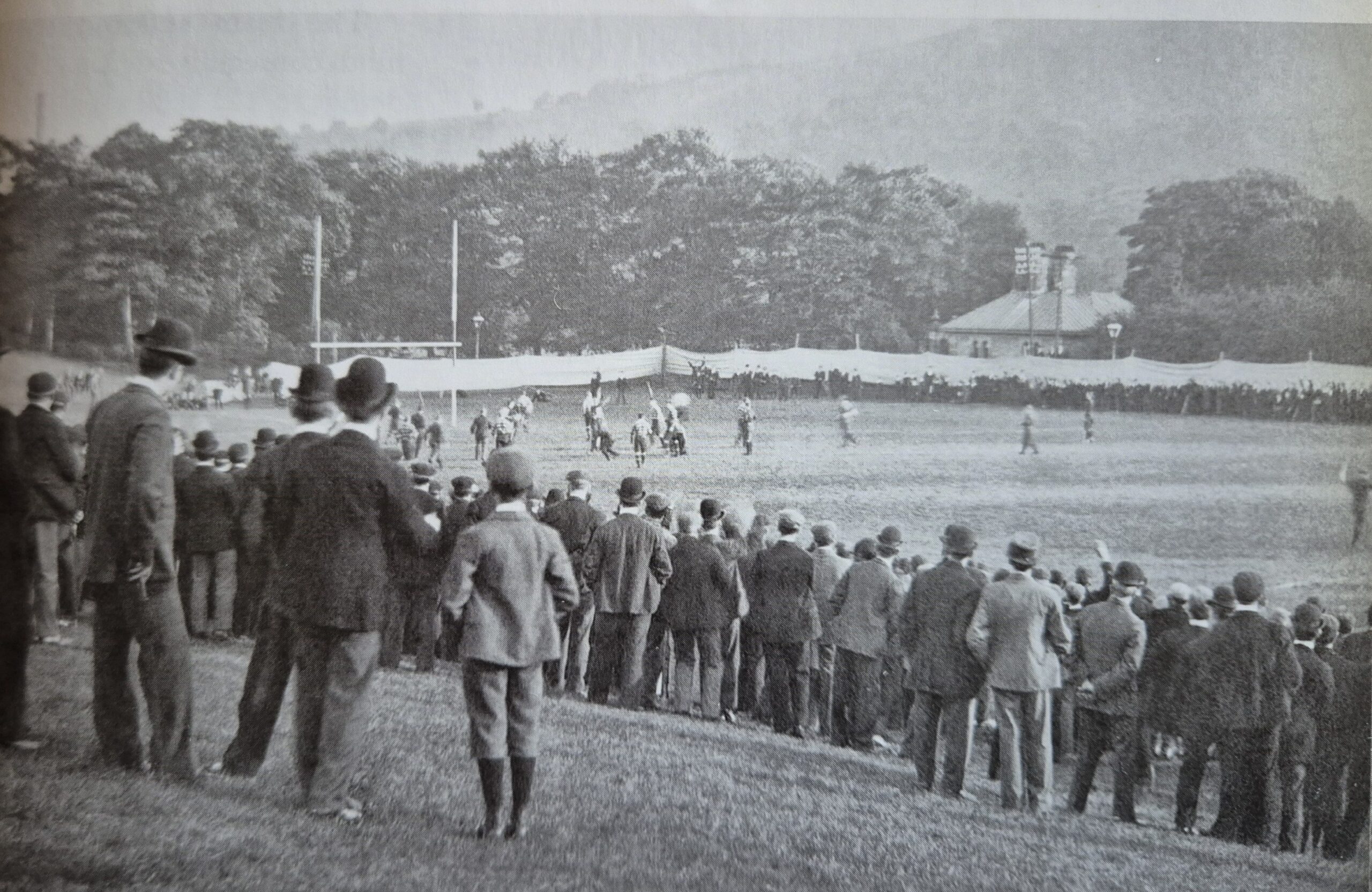
Despite continuing financial issues, Todmorden embarked on another season in 1900 again playing in the Western Division of the Yorkshire Northern Union No2 competition. By January of 1901 the club was entirely dependant on local lads and temporarily ceased all player payments.
In March of 1901, Todmorden started a Workshop competition and attracted 22 entrants. The entry fees and gate monies cleared the club’s debts. For the record, Moss Brothers of Eastwood were the winners.
By 1900-01, the Todmorden club was fielding an “A” team, interestingly alongside a team at the hilltop village of Cross Stone where a future Todmorden team would play. They reached the final of the Halifax Cup with a special train carrying 800 fans coming to Hebden Bridge for the game. Their opponents were Halifax “A”. It was not to be a successful day as the Halifax “A” was a superior side including several 1st teamers who were eligible. Todmorden had Bob Suttcliffe sent off but at the end of the 80 minutes it was still 0-0. Todmorden refused to play extra time unless Bob could return. A replay was ordered for two days later on the Monday at Sowerby Bridge. Todmorden protested they had 4 injured players and could not play until the following Saturday. Despite 3000 spectators turning up for the game, it did not take place.
For 1902-02 season the club reduced player payments to 326d for a win and 2s6d for a loss. May players refused to sign on at the reduced rates, several committee members resigned and a special meeting was called to discuss disbanding the club! It was decided to carry on but the season was not a happy one. In December, Hebden Bridge were defeated 9-2 but it was reported there was not as much interest as usual. Soccer was on the rise. Following an AGM in July 1903, the club voted to disband despite players voting to play without pay.
Todmorden was only one of the clubs who folded in 1903 although their debts totalled only £4, as a crisis hit the Northern Union generally in the early years of the 20th Century, as the payment of players brought financial difficulties.
Todmorden were back in 1911. They had moved down into the valley and were playing at Sandholme.
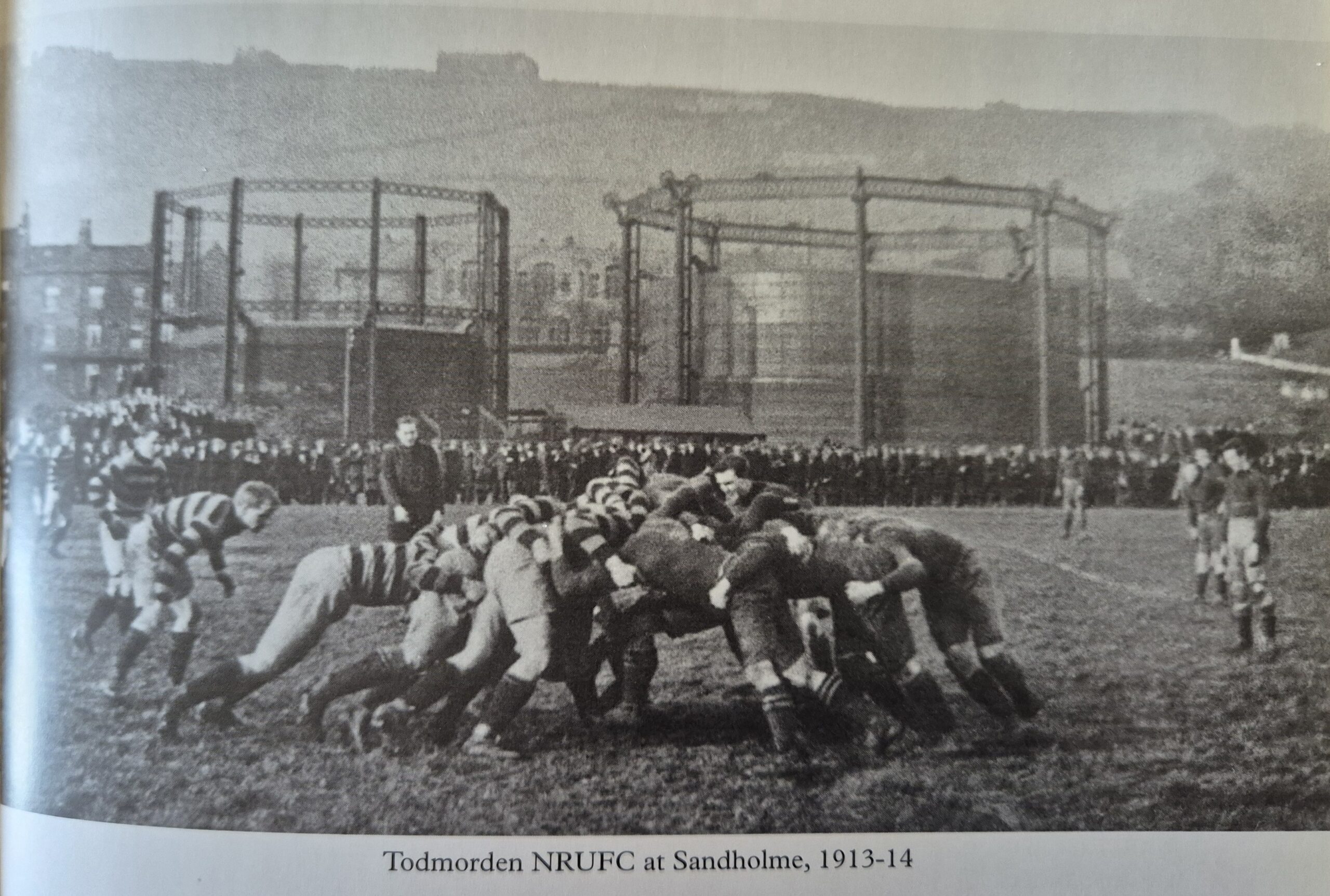
Soon Todmorden became one of the leading teams in the pre-war years. They won the Halifax Championship against Raistrick in the 1913-14 season and are pictured with this trophy and the Bradford and District Cup in front of their home at the Shannon and Chesapeake public house.

However, by the end of the Great War, Todmorden had disappeared again.
In 1925 Rugby League was in the air again and another Todmorden appeared sharing Eastwood’s cricket ground and were joined by Bourillion, a team also playing at Eastwood in a field acquired at Haugh Tops. Both clubs joined both the Halifax & District and Rochdale & District Leagues. Both would soon disappear. Bourillion, went back to playing soccer later in 1925. Todmorden last longer, having moved to Rough at Landfield in 1928, where earlier Todmorden teams had played, but the climb up to the ground was blamed for falling support and after playing only 10 games in the 1930-31 season they disappeared once again in 1931.