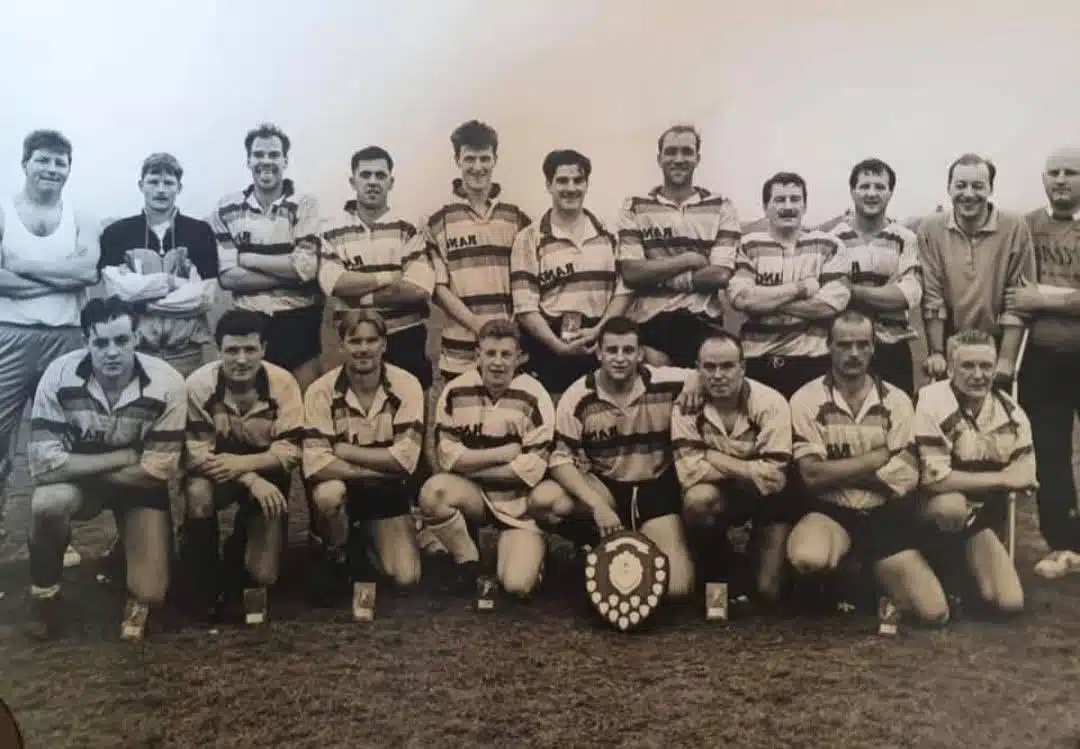
The idea of a Workshops competition is a simple one: arrange a competition for local companies and pubs to introduce new players to the sport, give players a chance to play out of season and to raise much needed funds. There were several Workshops competitions around the end of the 19th and beginning of the 20th centuries. Sowerby Bridge were the first to organise a Workshops in the area in 1902. Halifax Cricket & Football Club followed a year later.
So, the history of the Halifax (later Calderdale) Workshops competition goes all the way back to 1903 when the Halifax Cricket and Football Club began its annual workshops competitions. Interestingly, the games which were played at Thrum Hall on midweek evenings, were twelve-a-side. The Halifax competition was on a bigger scale than the previous ones in Todmorden and Sowerby Bridge. This competition proposed a trophy and, amazingly, gold medals for the winners. It also provided a stripes and a white kit for use by the teams. In the first year, a total of fifty teams paid the 2s 6d entry fee. One result of the 1903 Workshops, was a special match between Halifax RLFC “A” and a Workshops Competition Select team on Christmas Day morning.
Oates and Green’s, based at Beacon Brick Works at Ellen Royd, were winners for the next three years 1904 to1906 at Thrum Hall. After a great final in 1908, winners Bairstow & Balmforth’s Alec Thompson was signed by Halifax. The competition was to continue through to 1909. Boothtown Volcanic were that year’s winners and two of their players, winger Thompson and full-back Herbert Mitchell, were also signed Halifax club. This was to be the end of the line for the Workshops for several years.
As would be a feature in future years, many Workshops teams went on to establish regular season teams. In 1907-08 the new Halifax Intermediate League was launched and of the 12 teams four were former Workshops teams – Campbell’s, Royston’s (James Royston, Son and Co, Shroggs Wire Works) Market Hall (Halifax Market) and Victoria Iron Foundry (who joined as Brighouse Victoria).
The following year’s League U21 competition was joined by another former workshops team, H.Fletcher & Co.
Butler’s engineers in Gibbet Street was another company involved in the Workshops competitions both before and after World War 1: as a wartime munitions company they had plenty of young workers to make up a team!
The progressive Calder Valley club organised their own Workshops competition on 1924.
The Halifax Workshops competition was re-introduced in 1929 to try to reignite interest in the town for Rugby League. The 1929 competition was won by Siddal Old Boys. Other winners in the next decade were Pellon Old Boys (1930), Cross Key, Siddal (1933), Ram’s Head, Sowerby Bridge (1935) and United Services (1937)
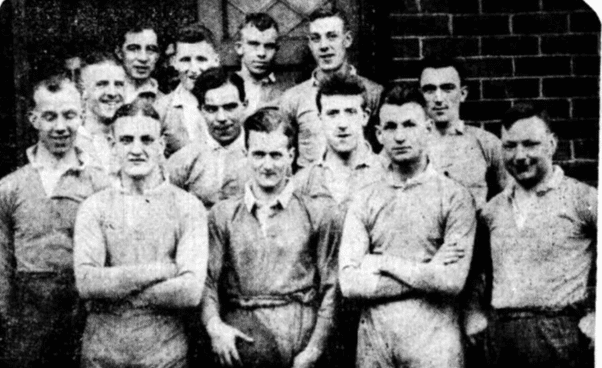
Cross Keys, Siddal. Halifax & District Workshops Winners 1933. In the picture are: back left: John “Jack” Kitson: front left: George Kitson: Back 2nd from right: Harry Kitson: who were all brothers. Their father was George Henry Wray Kitson who played for Halifax in 1903 (Halifax Heritage number 11).
Mackintosh’s were four-time finalists in this era but didn’t win the trophy. Paton & Baldwin’s were another entrant who actually went on to join the league, but the others were happy to stick with just the workshops and friendlies. Having to come up against the town’s leading sides would have appeared daunting to most occasional teams.
Smith’s Wireworks showed interest in forming an open-age side in 1934 to play in the Halifax League but played in the Workshops competition that year instead.
Kitchen & Wade’s, an engineering company, had also fielded teams in Workshops competitions in this pre-WWII era.
Attendances at Workshops were a good source of income for the Halifax & District League although by the standards of the day they were modest. In 1938 final between Vowles Combination and United Services drew around 1,200. By contrast, 1939 almost 7,000 turned up for to see Hartley & Sugdens triumph over Rawdon & Weavers (Luddendenfoot) in the Workshop Thrum Hall Final as it was the night of Halifax RLFC’s triumphal return with the RFL Challenge Cup. The Cup was to be on display in the stand and Halifax captain Harry Beverley presented the Trophy.
In the 1970’s, the Halifax & District decided to re-ignite the Workshops and around 1977 the first of the modern Workshops competitions licked off.
Lots of new clubs were still being formed in the Calderdale area, where interest in Rugby League was at its height in the late 1980s following the Halifax team’s Championship win and two Wembley appearances. Australians attracted much of the national media attention for that, but local products Scott Wilson (Brighouse Rangers), Ben Beevers (Ovenden) and Mick Scott (Siddal) were just as influential.
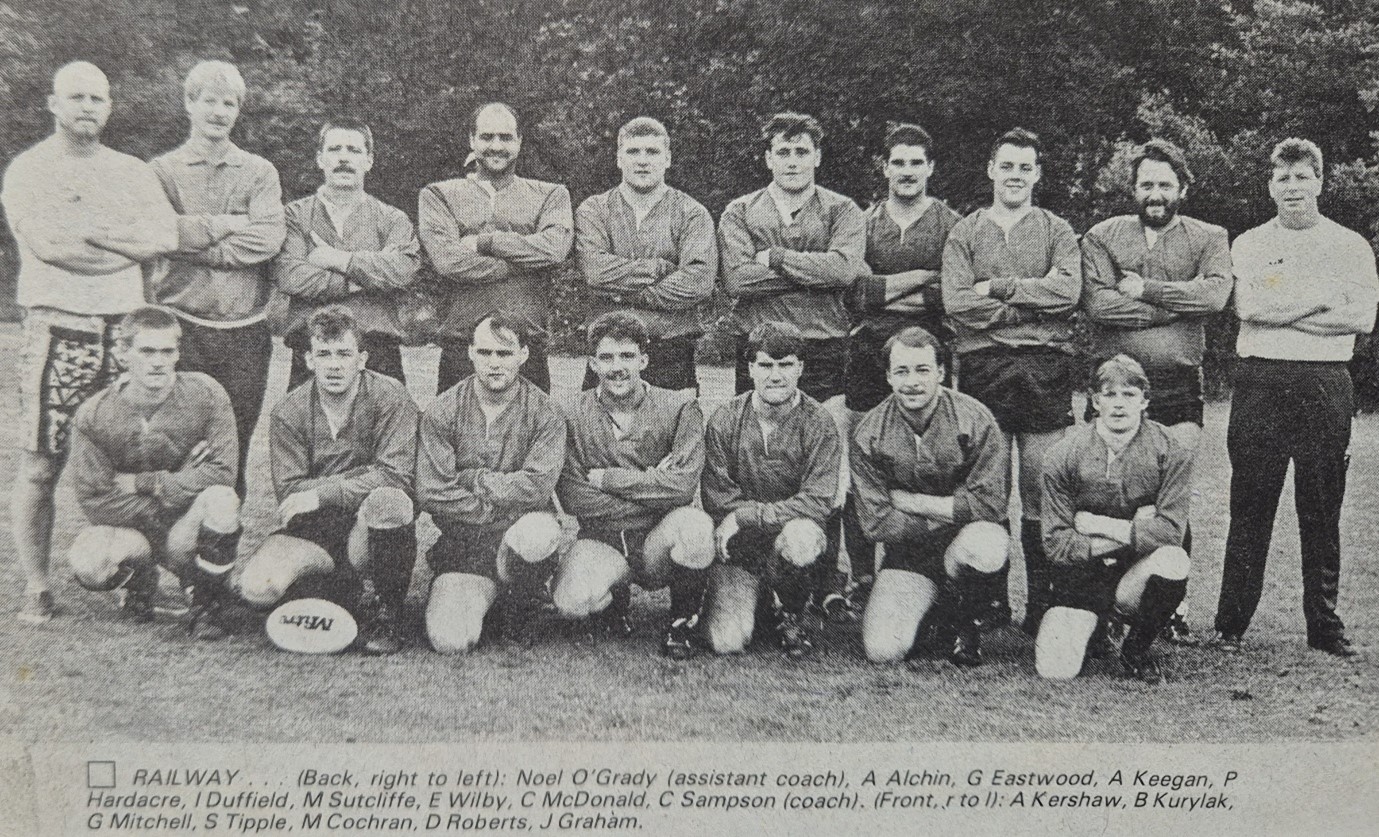
Among these new clubs were several who first started off in the annual summer workshops competitions which had revived a few years before. Now usually staged at the grounds of Illingworth, Ovenden and Siddal rather than Thrum Hall as they were long ago, adverts would be placed in the Courier for teams to enter, usually with a good response. There could be as many as 20 teams some years, now often more commonly pub sides rather than works sides, who would play in groups followed by play-offs. As well as providing rugby for countless new players (eligibility rules changed over the years but generally restricted established lads) the competition also proved lucrative for the Halifax League organisers, through entry fees and match-night collections from spectators. Their bank account flourished around this time.
Several of the workshops teams who enjoyed the experience took the plunge to ambitiously join the Pennine League, and some of them prospered for a time. Now that this league had expanded, inexperienced teams could join the bottom division confident in knowing they would meet opposition more comparable to themselves than in earlier single-league systems.
One who gave it a go were 1986 Workshops winners Ovenden Way Hotel, who joined the league in 1986-7. Also from the 1986 competition were Oddfellows Inn, Elland (where player Mick Agus was landlord), who joined in 1988 and lasted a bit longer, using Elland Recreation Ground. Workshops stalwarts Talbot Inn followed in 1989, on a pitch at Tar Hill while training at Catholic High School and Furness Community Centre, but withdrew a couple of years later. Friendly Inn on Ovenden Road joined up, as did Furness from Illingworth in 1993, while two who joined in 1994, Dimensions Gym (playing at Brooksbank School) and the Lonsdale pub at Wheatley, were League members for the same three years. Meanwhile, John Fredericks Plastics of Elland, who had been workshops entrants in 1990, and pub sides Three Pigeons and William IV, all initially opted for a Sunday set-up in the West Yorkshire League, which was seen as less intense than the Pennine League, and kept going for a short while
Meanwhile, John Fredericks Plastics of Elland, who had been workshops entrants in 1990, and pub sides Three Pigeons and William IV, all initially opted for a Sunday set-up in the West Yorkshire League, which was seen as less intense than the Pennine League, and kept going for a short while.
Wainstalls were a new club formed in 1993, growing out of the Cat i’th’ Well pub workshops entrants.
Sadly, the Halifax Workshops competition is no more. However, players remember it with affection.
Phil Roberts, who played for his coach brother Eric Roberts at Holset Engineering in 1977 states “proper happy days.”
Damien Roberts played for The Fleece (Lindley) in the mid 1980’s clearly enjoyed the Workshops lamenting “happy days will never be seen again”.