The Halifax Cup has had the strangest of histories. It’s had different names, served different sports, been the highlight of the season and been almost forgotten.
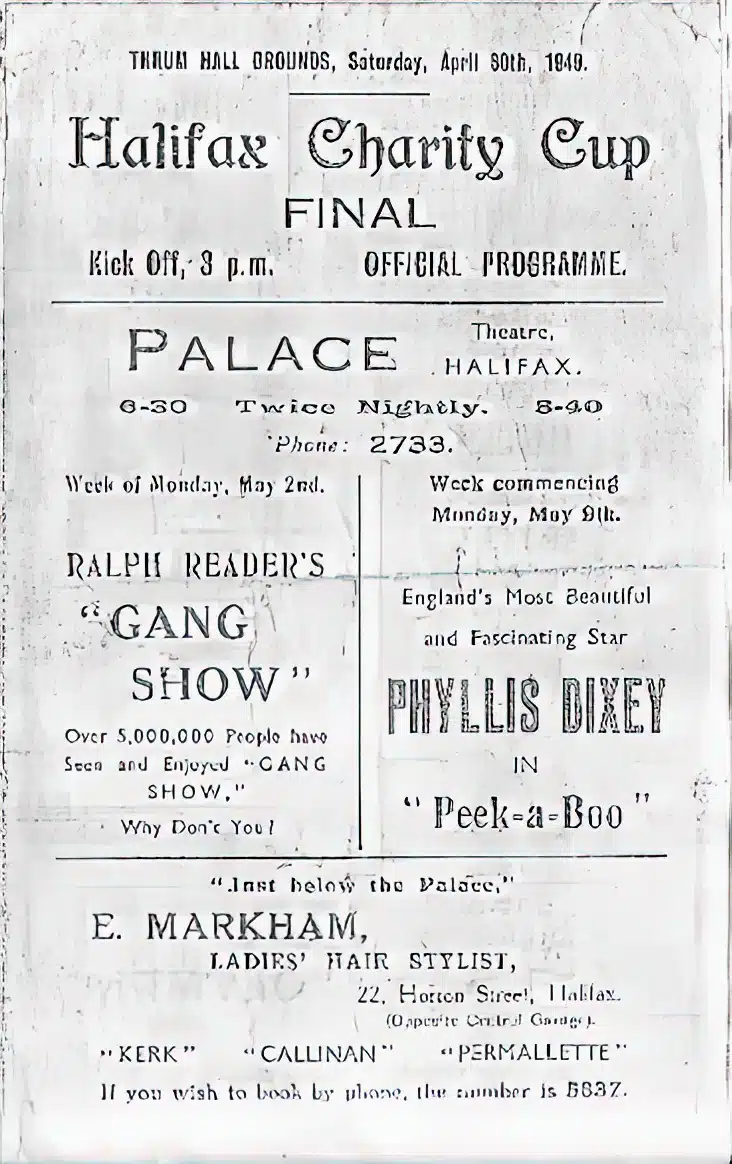
It began in 1885, in the days when the only form of rugby was the fifteen-a-side version. The Rugby Union authorities frowned on leagues and cups, but a Yorkshire Cup had proved a great success since it was launched in 1877, and it was only a matter of time before local versions followed. A Bradford Cup had started the year before and a similar one in Huddersfield, the Holliday Cup, launched at the same time as Halifax’s. Leeds followed in 1887 and Keighley in 1889.
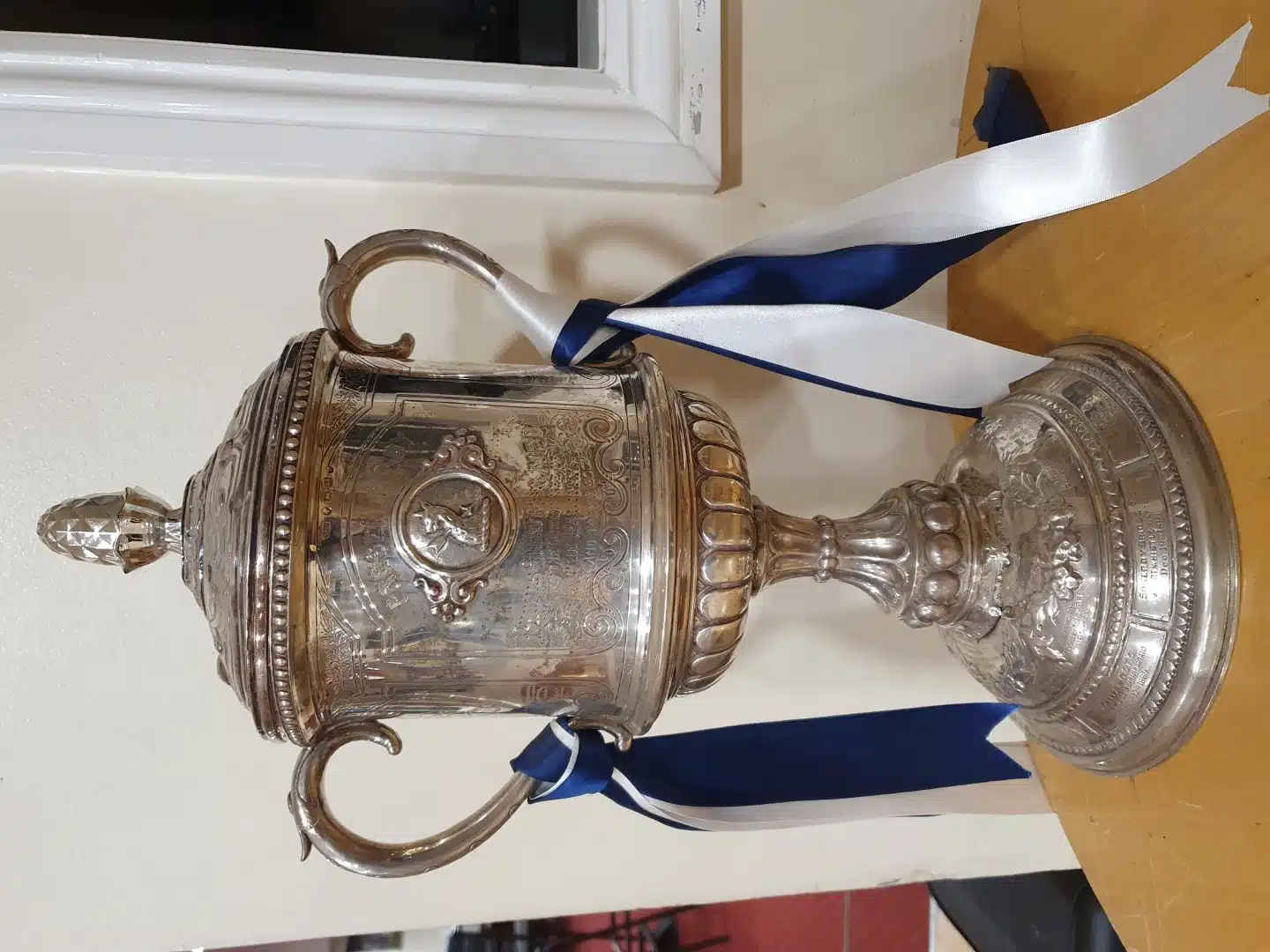
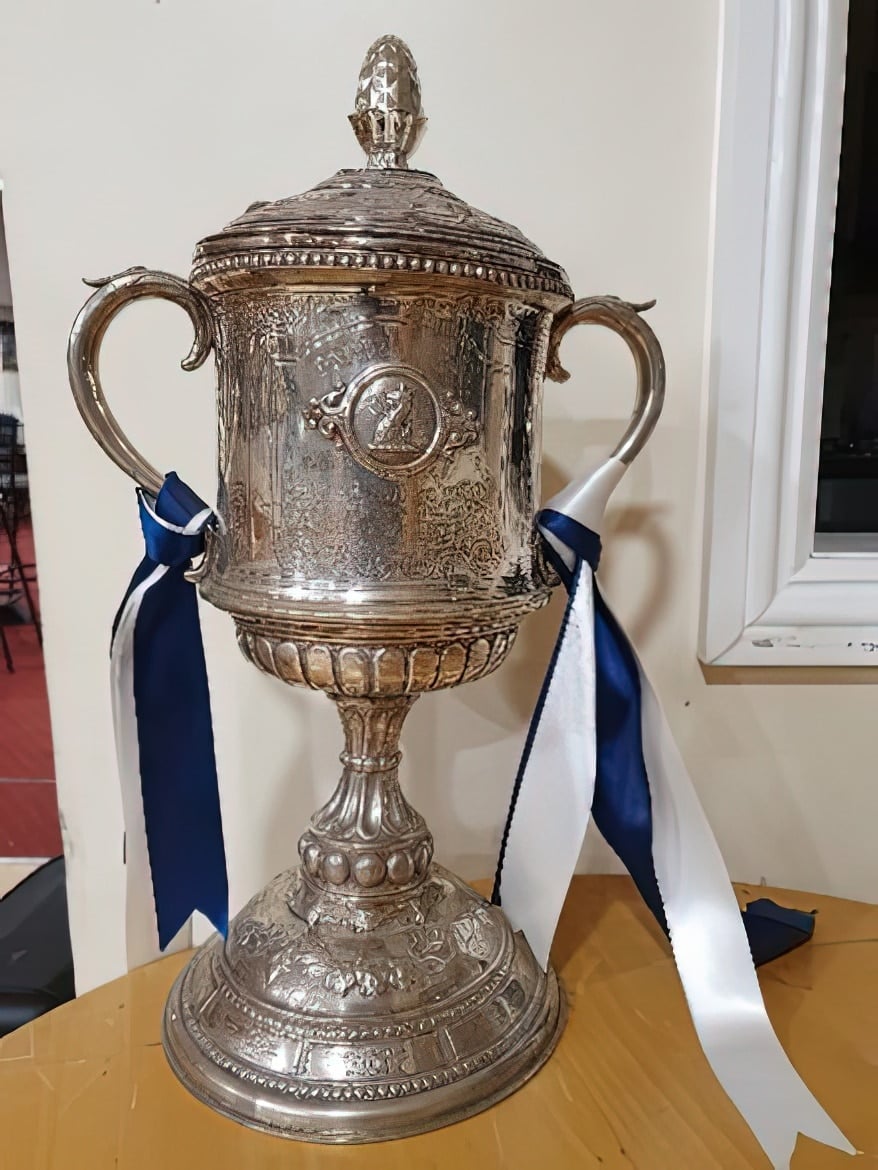
The Halifax version was donated by Thomas Shaw, one of the two Halifax M.P.s at the time. Born at Holywell Green , he was a Liberal in William Gladstone’s government, first elected in 1882 and holding the seat until his death in 1893 aged 69. It was a magnificent solid silver trophy, totally unlike the tat that would be produced these days, costing him 50 guineas (around £5,500 in today’s money). Manufactured by George Davis, a jeweller and silversmith of Old Market, Halifax, it was 2-feet high, mounted on a mahogany plinth with 18 silver shields for engraving future winners, a 3-inch figure of a player on the top, and on the front the coat-of-arms of the Halifax Infirmary. Shaw presented it to the committee of the Halifax Friendly and Trade Societies, with the aim of it being run by them as a Charity Cup, designed to make money for the infirmary, leading to some references to it as the Infirmary Cup. Before the days of the National Health Service – still over 60 years away – hospitals were always in need of funds and were the most worthy of causes.
It retained the name Charity Cup for almost 100 years, but in modern times became either the Halifax Cup or, during the years of sponsorship by Clifford Fee, the Fee Cup.
The first competition in 1885-6 encompassed the top sixteen teams in the town, though Halifax’s first XV were barred as too strong – their second team took part instead. The two to win through to the final were Salterhebble Athletic Club (who beat Halifax “A” in the semi-final on neutral ground at Brighouse) and Mytholmroyd. It was played on Halifax’s ground, provided rent free, not then Thrum Hall but the club’s previous home at Hanson Lane, on Boxing Day 1885. The final was to remain at various dates in December until a switch to Easter in 1895. Gold medals were promised for all of the winning players, with silver medals for the runners-up, a situation which continued until well into the twentieth century.
Salterhebble won and celebrated in style. The team were driven afterwards to their headquarters at the Punch Bowl Inn by waggonette, the cup on display at the front. No official attendance was ever reported, but accounts later showed that the tournament had produced £70 (£7,500 today) for the Infirmary. Salterhebble retained the cup the following year, the final at what became its established home at Thrum Hall, Halifax having moved in there that year. If they had won it a third year in succession the competition rules dictated that they would have been able to keep it, but they were beaten in the semi-final by Halifax Free Wanderers. The rule was quickly deleted.
The 1889 Final between Halifax “A” and Hebden Bridge produced a record crowd to date of over 3,000, a special train bringing in supporters from down the valley. Halifax “A” won, bringing calls for them to excluded in future. When that didn’t happen, Elland, Hipperholme & Lightcliffe, Mytholmroyd, Sowerby Bridge and Hebden Bridge all refused to enter in 1889-90. Halifax A fielded weakened sides in an attempt to pacify them, and lost to Greetland in the final that season, then chose not to take part in 1890-1. In their absence Sowerby Bridge were winners in the final against Salterhebble. They drove home by special bus, to be met by a band opposite the Shepherd’s Rest Inn, who paraded them to their headquarters at the Bull’s Head; Wharf Street was said to be crowded.
Halifax “A” returned in 1891-2, reaching the next three finals, though losing to Sowerby Bridge in 1891-2. Only with the introduction of a proper game-wide “A” Team competition for reserve sides did Halifax “A” once more withdraw in 1894-5. Sowerby Bridge beat Luddenden in the first Easter Tuesday Thrum Hall final, watched by a crowd of 2,500.
This was the period that brought the birth of the game now known as Rugby League, so Halifax, like Brighouse Rangers, could not have been involved anyway. Not only were they now playing a different sport, they were also no longer amateurs. But other than the 22 breakaway clubs, every other team remained in Rugby Union, so the Charity Cup continued very much as normal. The final could no longer be at Thrum Hall though, so in 1895-6 and 1896-7 Sowerby Bridge’s ground at Beech was used and in 1897-8 Hebden Bridge’s Calder Holme. If anything, the attendances were even better than at Thrum Hall, reaching “about 5,000” according to the Courier on Good Friday 1898. Official figures were still never given, but this was very probably a new record.
The finals were still great occasions, arousing great enjoyment and celebration for many, especially the players. The victorious Mytholmroyd team in 1897 took the train from Sowerby Bridge to Luddenden Foot, where a bus was waiting to drive them through Brearley and Mytholmroyd then on to Hebden Bridge, before returning to the Mytholmroyd headquarters at the Royal Oak on Burnley Road (nowadays converted into flats). By 1898 total monies handed over to the Infirmary since the start had passed £350.
Despite all this, more and more teams were switching over to the new Northern Union, leaving few to contest the Charity Cup. For 1898-9 a final was arranged for Hebden Bridge again, but only Sowerby Bridge, Hebden Bridge, Mytholmroyd, Stainland and Halifax Crescent were left to take part. Sowerby Bridge and Stainland won through, but then Stainland were suspended by the Yorkshire Rugby Union for an assault on the referee in another match, when he was “sodded and kicked” by the crowd. The Charity Cup committee ruled that Mytholmroyd and Crescent should play-off to replace them, but Mytholmroyd saw no honour in winning a cup that they had been knocked out of and pulled out. No final ever took place, the gold medals being awarded to Sowerby Bridge, but neither silver medals nor the cup itself being presented.
When Sowerby Bridge, Stainland, Hebden Bridge and Crescent chose also to change to Northern Union, only Mytholmroyd were left in the Cup’s catchment area. The committee organising it opted to go with the flow and changed it to a Northern Union competition.
The first Northern Union (or Rugby League as it was to become) Charity Cup competition was thus in 1899-1900. Despite being effectively professional teams, the reserves of senior clubs Halifax and Brighouse Rangers predictably won though to the New Years’ Day Final – the first day of the new century – at Elland. On a freezing, foggy day, Rangers won 2-0. Elland Free Wanderers annexed the trophy in the 1901 final against Halifax “A” in front of around 2,500 onlookers at Brighouse’s Lane Head ground, but then Halifax “A” won it three years in succession, the last two at Thrum Hall. That may have caused a tailing off of interest by the others. Newspaper reports start to mention difficulties in getting teams to enter, and in 1904 the competition’s organising committee dissolved themselves. A match was played for the trophy in 1904-5 between Thrum Hall and Salterhebble without earlier rounds.
The Halifax League had ceased to operate at this time, local teams competing instead in the Bradford & District League. To keep the Charity Cup alive, its organisation was handed over to this league on condition that the proceeds continued to go to Halifax charities, a really strange situation. The cup had originally been intended for teams from Halifax parish only. As things turned out, there was no tournament at all in 1905-6. In 1906-7 Bradford & District teams from Halifax and Huddersfield took part, but since two of them were Halifax “A” and Huddersfield “A” the finalists were somewhat predictable; Halifax “A” won 11-5. An expanded entry saw Stanningley from Leeds win it in 1908, and stage the following year’s final between Rastrick and Victoria Rangers at their ground. Otherwise, the final did at least remain at Thrum Hall, though profits dwindled; the overall profit on the 1908 competition was just £2 10/-. The trophy returned to Halifax ownership soon afterwards, but open to teams from other areas to make it viable. Slaithwaite Juniors reached the final in 1910, Keighley Zingari won it in 1912 and 1914, and Wyke in 1915.
There was no competition during the rest of the First World War years, 1915-18. When it returned in season 1919-20 its rather strange existence continued, for although the entries were the highest for twenty years or so, they still included few actually from Halifax. In there were Harrogate, Underbank, Sticker Lane (Bradford), Stanningley, Sharlston Rovers, Outwood Parish Church, Idle, Windhill and Oakenshaw, plus the “A” Teams of Halifax, Keighley and Bradford Northern. Fortunately, there was also Elland, Sowerby Bridge, Holywell Brook, Kingston Juniors and the West Riding Regiment. Sharlston won it, having beaten Halifax “A” in the semi-final and Wyke in the Thrum Hall Final.
There remained relatively few Halifax teams involved for a considerable time, as the great spectacles of the early years became a distant memory. Somehow the Charity Cup had lost its way.
Halifax “A” were in the final again in 1921, bringing a fresh chorus of objections, especially as the final was on their own ground. They lost to Wyke to dampen them but were so irritated that they decided not to enter again. It then became the Rastrick era, with nine successes over the next thirteen years. Fellow Huddersfield League side won Lindley won twice in between. Among the beaten finalists were Sowerby Bridge West End, Stainland and Calder Valley, the team who finally broke the trend when they won the cup in season 1929-30. Interest among the Halifax clubs had otherwise become so low that the 1928-9 final was Featherstone Rovers “A” versus Castleford “A”, watched by very few spectators. Open-age teams in Halifax declined to such an extent that the Final became an invitation match between Rastrick or Rastrick Intermediates and another Intermediate League side - Warley Old Boys in 1933, Stainland or Halifax West End in 1934, and Halifax West End in 1935. Gate receipts for the latter were a mere £25. Some of the finals were not even reported in the Courier.
Such was the malaise that there were probably no more Charity Cup competitions from 1935 until then end of the Second World War in 1945. But local league officials, notably Eric Lingard, were quick off the blocks as soon as it did to organise a revival. As early as March 1945 letters were sent out to clubs in the Huddersfield, Bradford, Keighley and Leeds as well as Halifax League areas to take part. Locals Kitchen & Wades, who that season had become the first ever Halifax team to win the Huddersfield League championship and cup, got through to the final at Thrum Hall on Whit Tuesday against Leeds All Soul’s, but lost 13-3. The A.T.C. Band played as attempts were made to make the final a big occasion once more, and 1,500 attended. H.M. Forces were allowed in free.
Out-of-town sides continued to dominate, Batley Carr Rangers winning in 1946 and Buslingthorpe Vale in 1947, though in the latter Southowram, coached by Shirley Crabtree (father of wrestler Big Daddy) had been runners-up. In 1948 Greetland finally broke the trend, to become the first Halifax-based winners for many years, having been pushed hard by runners-up Ovenden and semi-finalists Siddal and Pellon. With familiar contestants, the crowd was up to 2,500.
The year 1948 saw the formation of the National Health Service, with funding for hospitals, who now no longer depended on charity support. The Charity Cup retained the name however, in 1948 donating £25 each to the Halifax Nurses’ Welfare Fund and the St John’s Ambulance Brigade. Uniformed St John volunteers were regularly seen at amateur matches to offer first aid and emergency medical services.
Halifax teams were back now in strength, Ovenden winning the cup four times in the ‘fifties, Greetland a second time, and Siddal and Luddenden once each. But it was not to last. There was no competition at all from 1957 to 1962; Ovenden started taking part in the Keighley Cup, and along with Siddal, the Huddersfield Holliday Cup. In early 1959 it was announced that the committee who organised it had decided to wind up. They requested the Halifax & District League to take charge of it, handing over the papers, books and remaining cash of £14.
The local league had no better success in trying to arouse interest. With time short for 1959, they decided on an invitation match between selected representative teams of the Halifax League and the Huddersfield League. Huddersfield won 26-18. Entries were invited from local clubs for a re-start the following year, with a suggestion that matches be played on Sundays at the Greetland and Hebden Bridge grounds, but only one club showed any interest in entering and the idea was shelved. As a last resort, the losing semi-finalists from the Under 19 league were invited to compete for the Cup, Mixenden and Queens Road meeting at Hebden Bridge on Sunday 8 May. Afterwards a donation of £3 3/- was made to the British Red Cross Society from the proceeds. With all due respect to the contestants, who kept the Charity Cup alive, it was a new low in the Cup’s history. In 1961 the Huddersfield, Bradford, Dewsbury, Keighley and Rochdale Leagues were approached to see if any teams were interested, but only two entries were received and the competition was cancelled.
Finally in season 1962-3 the local clubs stirred and the cup was revived. Greetland , Ovenden, Siddal and Illingworth contested semi-finals, with Greetland emerging winners. From this point it was generally referred to as the Halifax Cup, with proceeds for the Halifax & District League. Hebden Bridge won it in 1964 and 1965 before Illingworth and Ovenden became dominant for a while. The finals were all at Thrum Hall, so were special occasions for the players and their supporters, the bar in the Newstead corner was open, decent if unspectacular crowds were attracted and receipts kept the league’s coffers ticking over.
But the 1970s were the time that sports sponsorship took off and things were about to improve far more. The league were lucky to have a potential sponsor already close at hand in Clifford Fee, head of J.& J.Fee Builders and Contractors, whose father Joseph and uncle James had founded the firm in 1945. Clifford had played for Pellon in his youth and was already a supporter of Amateur Rugby League. Local referee Henry Mason had served his time as a stonemason at J. & J. Fee and in 1976 approached Clifford to get involved. Not only did J. & J. Fee become sponsors, but Clifford also took on the role of League President. The Cup itself adopted the Fee name, later changing to the Joseph Fee Memorial Trophy, while the sponsorship eventually passed from the firm to the Fee Family.
The finals went from strength to strength, well-presented and managed, with dignitaries and new fellow-sponsors well looked after. Soon they had returned to being the prestigious occasions they had been in the nineteenth century. All the other finals gained sponsors as well, enabling league funds to reach unprecedented high levels.
When Thrum Hall was lost to the building of the Asda supermarket, the final moved briefly to The Shay, but with that ground already over-used and rental payable, the Halifax Rugby Union ground at Ovenden Park became a better option. Then, soon afterwards, a final switch to the Old Brodleians ground at Hipperholme, where the Fee family had connections. The sloping pitch there may not have been the best, but the clubhouse, the general off-field welcome, and the facilities for guests were first class.
Honours since the 1970s have been spread around, despite temporary dominance from Elland in the ‘80s and Halifax Irish in the current century. The Fee finals have tended to be great occasions, none more so than the two Brighouse Rangers v Illingworth finals in 2014 and 2015, the first won by Brighouse when an Illingworth foot in touch denied a late equaliser, the second won by Illingworth in the last minute of extra time. All with an atmosphere generated by sizeable crowds up against the railings next to the pitch or lounging on the grass banking when the weather permitted. The triumphal drives home to the winners’ local village may have been long gone, but player and fan celebrations on the pitch and clubhouse were more vociferous than ever.
Clifford Fee sadly passed away in 2017 at the age of 85, the cup reverting to its Halifax Amateur Rugby League Cup name. Ovenden won it in 2018, beating Greetland in the final at Siddal, then Siddal themselves won it in 2019, their Yorkshire Men’s League squad defeating Pennine League champions Ovenden at Chevinedge in what was designated the Championship Final, but with the cup being presented – by Maurice Oldroyd. With the 2020 season cancelled because of the Covid pandemic, the Cup has not been contested since. The old trophy now remains in Jeff Greenwood’s safe keeping.
Is this to be the end of competition for this fabulous trophy?
Halifax Cup Winners
1885-6 Salterhebble
1886-7 Salterhebble
1887-8 Hipperholme & Lightcliffe
1888-9 Halifax A
1889-90 Greetland F.C.
1890-1 Sowerby Bridge
1891-2 Sowerby Bridge
1892-3 Halifax A
1893-4 Halifax A
1894-5 Sowerby Bridge
1895-6 Luddenden Foot
1896-7 Mytholmroyd
1897-8 Sowerby Bridge
1898-9 Sowerby Bridge
1899-1900 (first as Rugby League) Halifax A
1900-1 Elland Free Wanderers
1901-2 Halifax A
1902-3 Halifax A
1903-4 Halifax A
1904-5 Thrum Hall
1905-6 No competition
1906-7 Halifax A
1907-8 Stanningley
1908-9 Victoria Rangers
1909-10 Halifax A
1910-11 Unknown. Maybe Wyke
1911-12 Keighley Zingari
1912-13 Elland Free Wanderers
1913-14 Keighley Zingari
1914-15 Wyke
1915-18 No competition – war years
1918-19 No competition
1919-20 Sharlston Rovers
1920-21 Wyke
1921-22 Rastrick
1922-23 Rastrick
1923-24 Lindley
1924-25 Sowerby Bridge West End
1925-26 Rastrick
1926-27 Lindley
1927-28 Rastrick
1928-29 Featherstone Rovers A
1929-30 Calder Valley
1930-31 Rastrick Intermediates
1931-32 Halifax A (maybe)
1932-33 Rastrick
1933-34 Rastrick
1934-35 Rastrick
1935-44 No competition
1944-45 Leeds All Souls
1945-46 Batley Carr
1946-47 Buslingthorpe Vale
1947-48 Greetland AR
1948-49 Ovenden
1949-50 Greetland AR
1950-51 Ovenden
1951-52 Luddenden
1952-53 Siddal
1953-54 Ovenden
1954-55 Keighley Albion
1955-56 Keighley Albion
1956-7 Ovenden
1957-58 No competition
1958-59 No competition (replaced by league rep match)
1959-60 No competition (replaced by U-19 match)
1960-61 No competition
1961-62 No competition
1962-63 Greetland AR
1963-64 Hebden Bridge
1964-65 Hebden Bridge
1965-66 Illingworth
1966-67 Greetland AR
1967-68 Illingworth
1968-69 Siddal
1969-70 Illingworth
1970-71 Ovenden v Siddal (draw). Ovenden won replay at Roils Head.
1971-72 Illingworth
1972-73 Siddal
1973-74 Ovenden
1974-75 Ovenden
1975-76 Mixenden
1976-77 Ovenden (first Fee Final?)
1977-78 Worth Village
1978-79 Park Amateurs
1979-80 Worth Village
1980-81 Mixenden
1981-82 Siddal
1982-83 Elland
1983-84 Illingworth
1984-85 Elland
1985-86 Elland
1986-87 Elland
1987-88 Ovenden
1988-89 Keighley Albion
1989-90 Park Amateurs
1990-91 Elland
1991-92 Ovenden
1992-93 Greetland AR
1993-94 Siddal
1994-95 Park Amateurs
1995-96 Siddal
1996-97 Ovenden
1997-98 Siddal
1998-99 Park Amateurs
1999-00 Park Amateurs
2000-01 Siddal A
2001-02 Elland
2002-03 Siddal A
2003-04 Elland
2004-05 Illingworth
2005-06 Halifax Irish
2006-07 Halifax Irish
2007-08 Halifax Irish
2008-09 Siddal A
2009-10 Halifax Irish
2010-11 Halifax Irish
2011-12 Brighouse Rangers
2012-13 Halifax Irish
2013-14 Brighouse Rangers v Illingworth 26-22
2014-15 Illingworth (after extra time v Brighouse Rangers).
2015-16 Boothtown Terriers
2016-17 Siddal (winter team) The 39th playing of Fee Final
2017-18 Ovenden
2018-19 Siddal